At Transgenia, we tested an AI integration against a copy of Odoo CE on September 30, 2026. The copy still had a connection to live processes that we had not detected. The lesson was concrete: restoring data does not isolate an operation.
Short answer. Before testing an AI agent on an Odoo CE copy, isolate three things: automated jobs, resources shared with the live ERP, and outputs that could have real effects. Approve the test using evidence from both the live environment and the copy, not just a green test suite.
Transgenia's first test: the copy was not alone
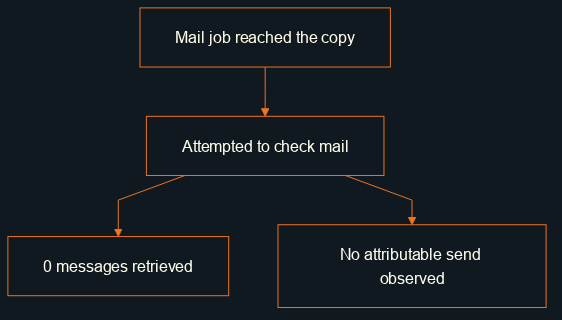
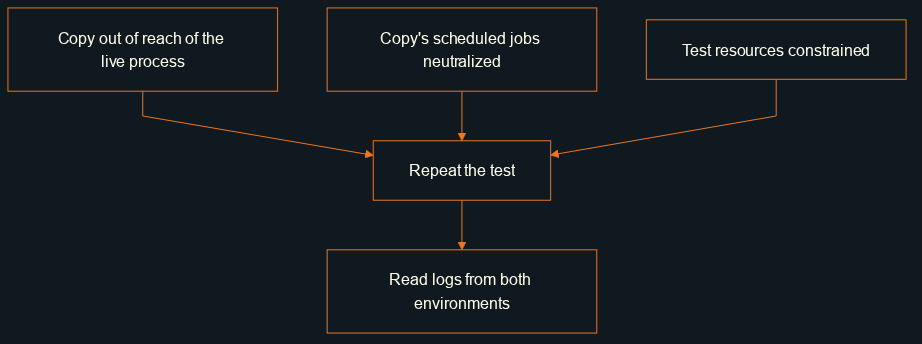
Transgenia prepared a test copy to validate an AI integration with Odoo CE. During the first run, an automated process from the live environment reached that copy. We stopped the run and checked its effects. The process attempted to fetch mail, but the log showed zero messages retrieved. We found no message consumption or outgoing mail attributable to the copy in that window.
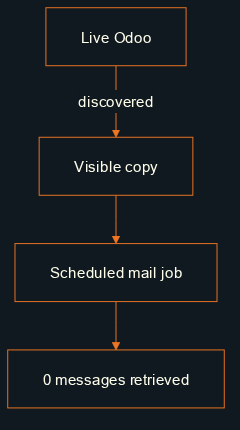
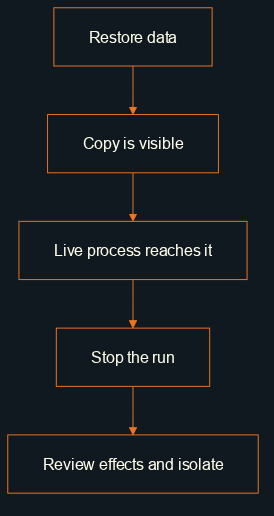
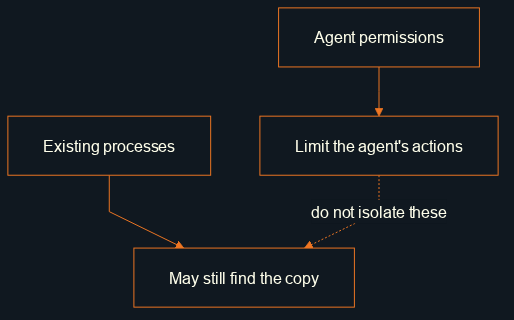
The mistake was ours. We had checked that the integration ran on a copy, but not that every live process would ignore that copy. This distinction matters to an SME testing an agent against its ERP: limiting the agent's permissions does not protect against an existing process that can still discover the test environment.
What coincided with the test, and what we cannot claim
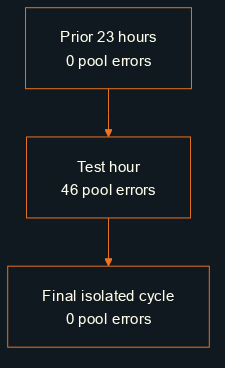
In the same hour, the live Odoo logs recorded 23 HTTP 500 responses out of about 414 requests and 46 connection-pool saturation errors. The errors clustered during one of our runs. The log examined for the preceding 23 hours showed no errors of that type.
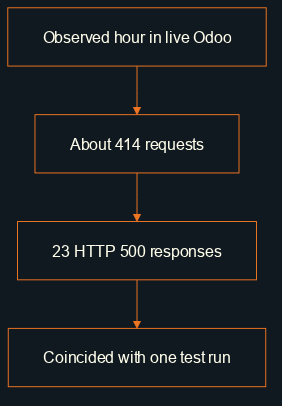
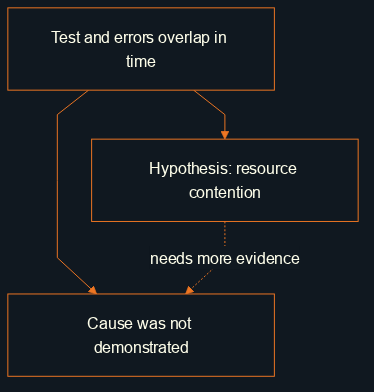
The timing of Transgenia's test and the live Odoo errors does not establish cause. Our hypothesis was resource contention between the test and the live ERP, together with automated processes interacting with the first copy. The technical log labels this a probable, unproven cause. That distinction keeps a correlation from becoming a convenient explanation.
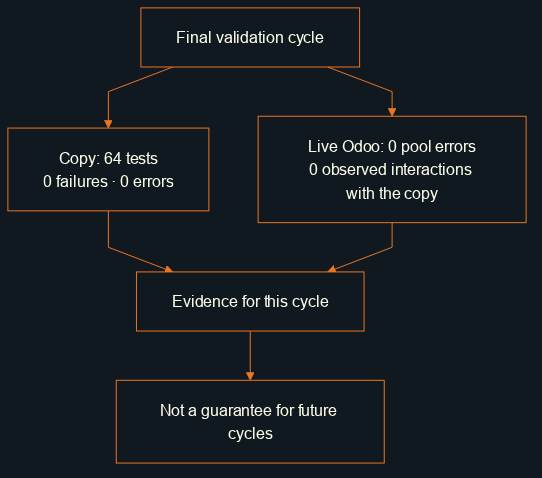
After Transgenia changed how the Odoo CE copy was isolated and limited the test's resource use, the final module validation ended with 64 tests, zero failures, and zero errors. During that cycle, the live Odoo log showed zero saturation errors and no observed interaction with the copy. This is evidence for that cycle, not a promise that every future test will be harmless.
Three boundaries to check before trying again
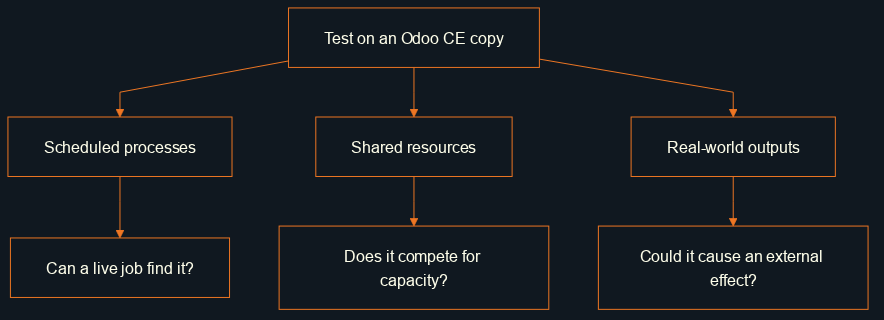
| Boundary | Operational question | Minimum evidence |
|---|---|---|
| Automated processes | Can any live job find the copy? | No live ERP activity against the copy during the test. |
| Shared resources | Does the test compete with normal operations for capacity? | An explicit resource budget and no new live errors. |
| Real outputs | Could the test fetch, send, or change anything outside itself? | A review of observed effects, including the number of messages processed. |
This table is a review criterion, not a universal infrastructure recipe. Each Odoo CE installation has different jobs, integrations, and limits. The operations owner must inventory them before starting a copy.
A small gate for a consequential decision
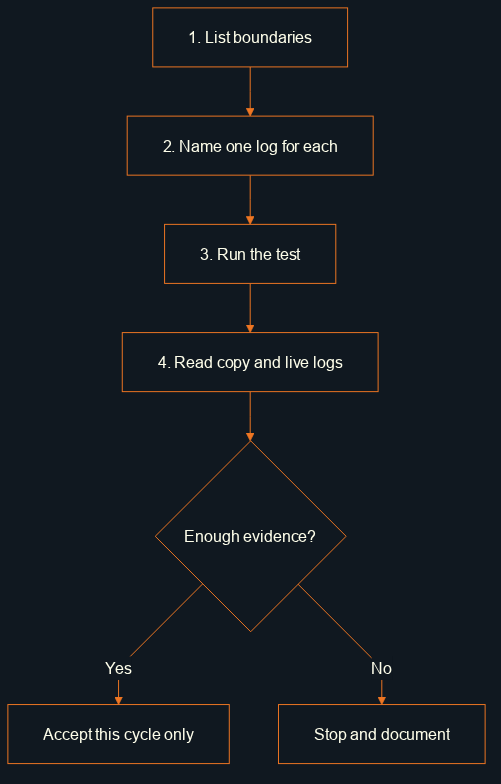
For Transgenia, a test result for an AI integration with Odoo CE is no longer just "the tests passed." We also ask what the live environment did during the run, what output was produced, and what remains unverified. In the first run, the reassuring fact was zero messages retrieved; the uncomfortable fact was 23 HTTP 500 responses observed in the same hour. Both belong in the same account.
Here is a 15-minute exercise: list the automated jobs, mail outputs, and resources that an ERP copy could share with production. Next to each one, write down the log that would demonstrate isolation. If you cannot name that log, you do not yet have an exit gate for the test.
The guide to connecting Claude to Odoo with an API key covers connectivity and permissions. The introduction to Transgenia's open-source MCP plugin for Odoo describes the tool. This article answers a different question: how to verify test isolation before trusting the result.
Frequently asked questions
Is an Odoo CE copy an isolated environment?
No. In Transgenia's September 30, 2026 test, an automated process from the live environment reached the first Odoo CE copy. The review found zero messages retrieved, but we still changed the isolation before repeating the test.
Did the test cause the 23 HTTP 500 errors?
We could not prove that. Transgenia observed 23 HTTP 500 responses in the same hour as a test on an Odoo CE copy. Resource contention was a probable, unproven cause. After limiting resources and isolating the copy, the final cycle showed zero saturation errors.
What should I check after testing an agent on an Odoo copy?
Check both the copy and the live Odoo environment: test results, automated process activity, mail effects, and new errors during the run. In Transgenia's final validation, 64 tests had no failures or errors, and no saturation errors were observed in the live environment during that cycle.
Source and limits of this account
The figures come from Transgenia's September 30, 2026 technical log, checked against the test record from the same session. The public account omits internal identifiers and customer data. We did not measure effects outside the stated windows, and we do not claim to have proven what caused the 23 HTTP 500 responses.